La Manga del Mar Menor – an introduction
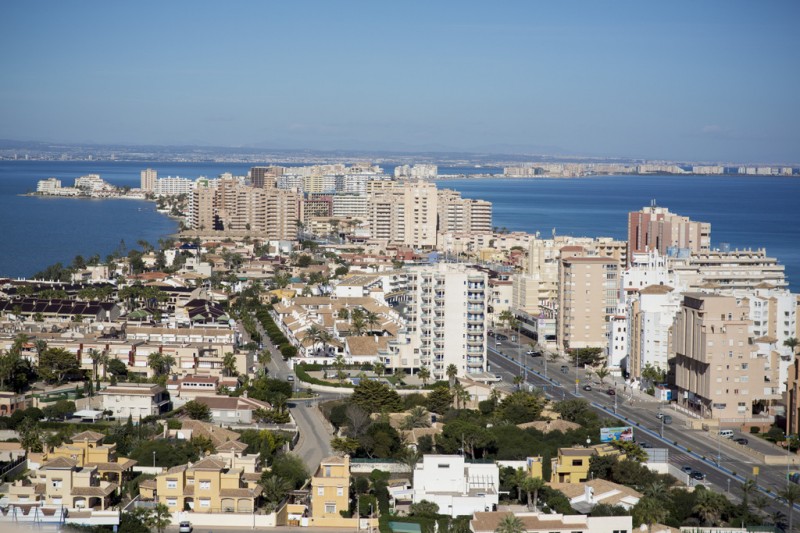
It seems incredible now, but until approximately 60 years ago La Manga del Mar Menor was of interest almost exclusively to geographers, who knew it as a 22-kilometre spit of land which protrudes from the headland of Cabo de Palos and encloses the Mar Menor, the saltwater lagoon which, with an area of 170 square kilometres, is the largest in Europe.
When the Civil War ended in 1939 there was barely any evidence of human activity on La Manga, apart from a couple of windmills and the archaeological remains, both on land and offshore, which provide evidence that humans have lived in the area for thousands of years.
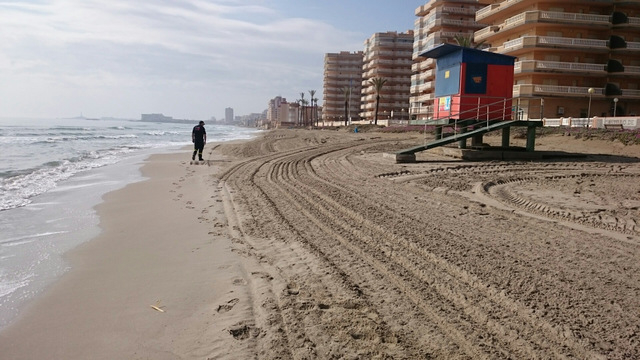
How times have changed. In the 1960s the first tourist infrastructures and high-rise blocks were built, and in the course of just a couple of decades La Manga went from an all but unknown landscape feature to one of the busiest beach reports in Spain, attracting tens of thousands of summer visitors from all over Spain every year.
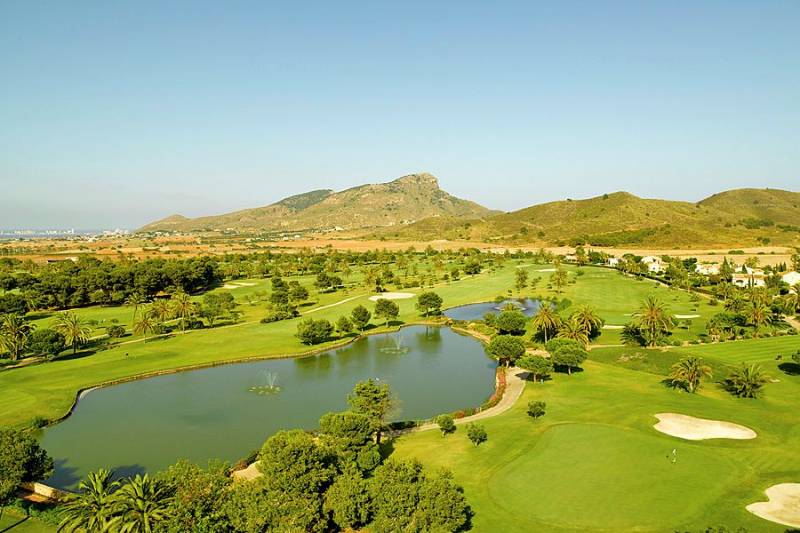
At the same time, La Manga Club, which is not on the narrow spit itself but near the village of Los Belones, close to Cabo de Palos, made sure that the name of La Manga was known internationally, and at the end of the twentieth century the number of foreign residents living on the “strip” rose and the year-round population increased as a consequence. By 2013 the population was reported to be just over 17,000.
La Manga today is without any doubt one of the most cosmopolitan places in the Region of Murcia and the Costa Cálida, with the only possible exceptions being La Manga Club and the airport! The permanent population is sufficient to support a variety of businesses and there are both primary and secondary schools, and despite the administrative ambiguity caused by it falling into the territories governed by two Town Halls (San Javier and Cartagena) it is a town in its own right, albeit an unusual one.
The main north-south road which runs the length of La Manga is an essential part of life here, and is the spine which joins all of the community together (although it becomes very crowded in summer). The geography of the spit is such that inevitably the southern end receives more visitors and was the first part to be developed, simply because it’s the first area where visitors arrive from the mainland. The first developments here included the Torre Varadero and the Torre Zeus, which are still the two tallest buildings in the municipality of Cartagena, and shopping centres and a plethora and bars and restaurants arrived with the first summer visitors. These are still in evidence and are replicated in varying styles all along the spit, although with less intensity at the far northern end where the land peters out opposite the regional park of the wetlands and salt flats of San Pedro del Pinatar.
The resort still attracts hordes of visitors every summer, and will continue to do so for as long as it resists the threat posed by global warning and rising sea levels. The reasons for this are various, but the most important are without a doubt the beaches and the water sports on offer in the Mar Menor and the Mediterranean.
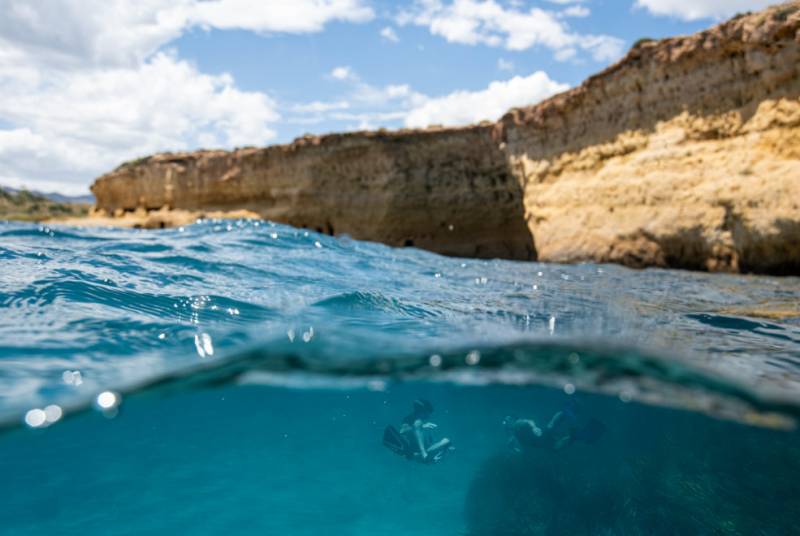
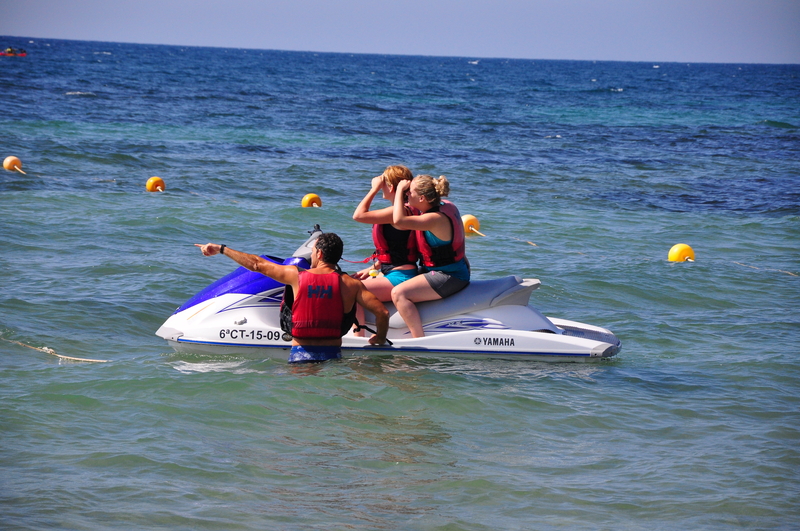
The choice between the calm water of the Mar Menor and the Mediterranean just a short walk away is one which offers something for practically everyone, and all along its length the beaches of La Manga are sandy and clean. At the same time three marinas in the Mar Menor provide mooring for over 2,000 boats, and for those learning to sail, water-ski or become an expert in countless other aquatic sports the Mar Menor is an ideal training ground: not only are high waves unknown, but at the same time there is normally a strong breeze throughout the year, although of course there are days in summer when this is absent.
It has to be said that La Manga is not liked by everyone. The fact that it was born as a town so recently means that it inevitably lacks the historical importance and traditions of other parts of the Costa Cálida, and of course there are no old buildings or quaint winding streets to give the place what is often referred to as “character”.
But on the other hand, La Manga del Mar Menor has a character of its own, and it makes an important contribution not only to the tourism sector of the regional economy but also to the variety of the Region of Murcia and the Costa Cálida: no-one should claim to have seen Murcia if they haven’t visited La Manga!
One of the most important summer holiday destinations in the Region of Murcia
It seems incredible now, but until approximately 70 years ago La Manga del Mar Menor was of interest almost exclusively to geographers, who knew it as a 22-kilometre spit of land which protrudes from the headland of Cabo de Palos and encloses the Mar Menor, the saltwater lagoon which, with an area of 170 square kilometres, is the largest in Europe.
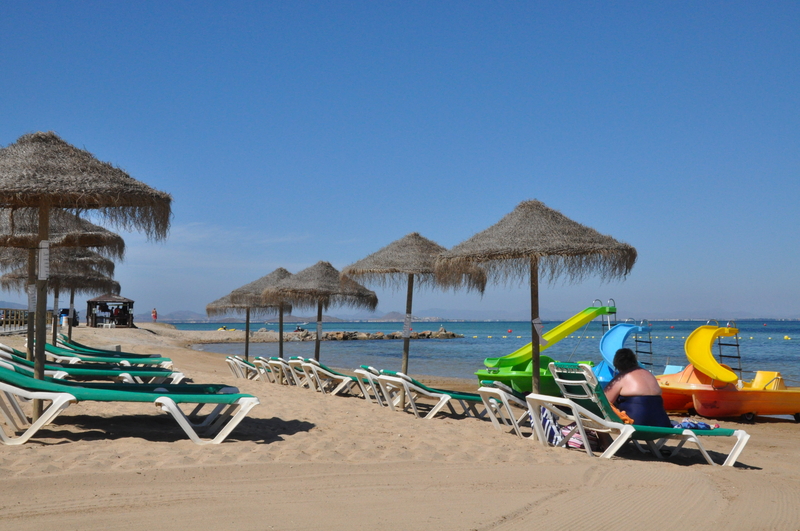 When the Civil War ended in 1939 there was barely any evidence of human activity on La Manga,apart from a couple of windmills and archaeological remains, both on land and offshore, which provide evidence that humans have lived in the area for thousands of years.
How times have changed. In the 1960s the first tourist infrastructures and high-rise blocks were built, and in the course of just a couple of decades La Manga went from an all but unknown landscape feature to one of the busiest beach resorts in Spain, attracting tens of thousands of summer visitors from all over Spain every year.
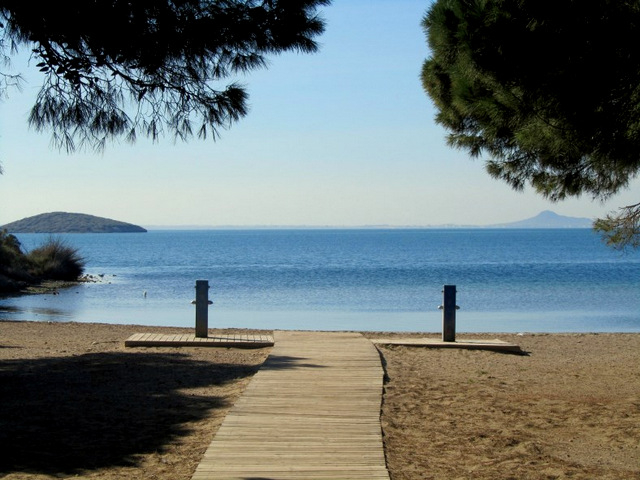 At the same time, La Manga Club, which is not on the narrow spit itself but near the village of Los Belones, made sure that the name of La Manga was known internationally, and at the end of the twentieth century the number of foreign residents living on the “strip” rose and the year-round population increased as a consequence. By 2013 the population was reported to be just over 17,000.
La Manga today is without any doubt one of the most cosmopolitan places in the Region of Murcia and the Costa Cálida. The permanent population is sufficient to support a variety of businesses and there are both primary and secondary schools, and despite the administrative ambiguity caused by it falling into the territories governed by two Town Halls (San Javier and Cartagena) it is a town in its own right, albeit an unusual one.
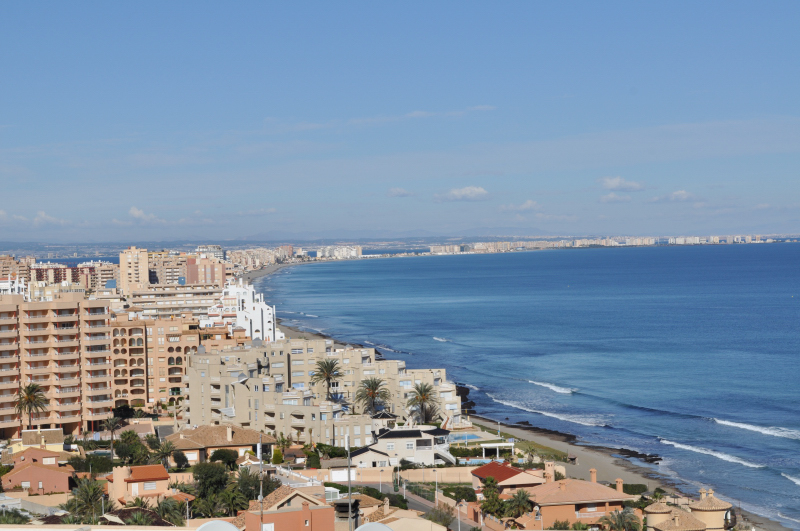 The main north-south road which runs the length of La Manga is an essential part of life here, and is the spine which joins all of the community together (although it becomes very crowded in summer). The geography of the spit is such that inevitably the southern end, which starts at Km0 by Cabo de Palos, receives more visitors and was the first part to be developed, simply because it’s the first area where visitors arrive from the mainland. The first developments here included the Torre Varadero and the Torre Zeus, which are still the two tallest buildings in the municipality of Cartagena, and shopping centres and a plethora and bars and restaurants arrived with the first summer visitors. These are still in evidence and are replicated in varying styles all along the spit, although with less intensity at the far northern end where the land peters out opposite the regional park of the salt flats and sand dunes of San Pedro del Pinatar.
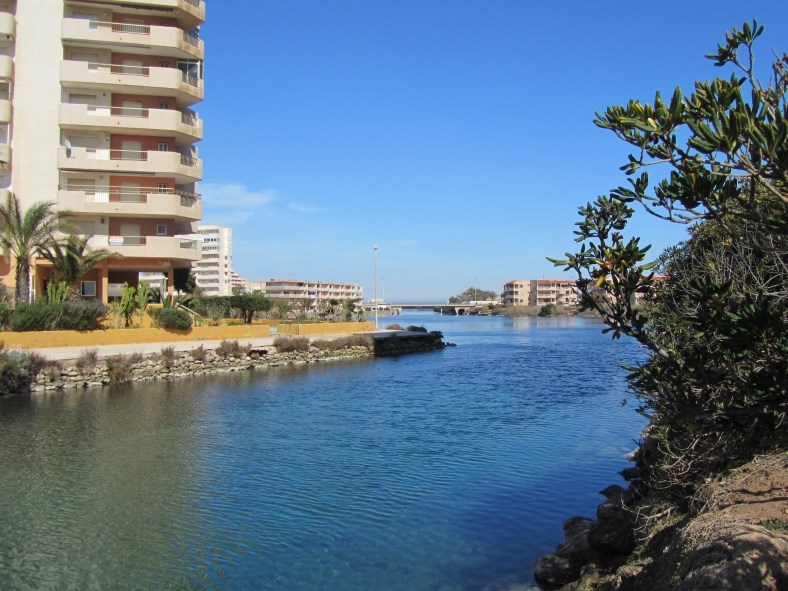 The resort still attracts hordes of visitors every summer, due mostly to the beaches and water sports on offer in both the Mar Menor and the Mediterranean.
The choice between the calm water of the Mar Menor and the Mediterranean just a short walk away is one which offers something for practically everyone, and all along its length the beaches of La Manga are sandy and clean. At the same time three marinas in the Mar Menor provide mooring for over 2,000 boats, and for those learning to sail, water-ski or become an expert in countless other aquatic sports the Mar Menor is an ideal training ground: high waves are unknown and there is normally a strong breeze throughout the year, although of course there are days in summer when this is absent.
 There is also a regular ferry service from La Manga to San Pedro del Pinatar and San Javier.
It has to be said that La Manga is not liked by everyone. The fact that it was born as a town so recently means that it inevitably lacks the historical monuments and traditions of other parts of the Costa Cálida, and of course there are no old buildings or quaint winding streets to give the place what is often referred to as “character”.
But on the other hand, La Manga del Mar Menor has a character of its own, and it makes an important contribution not only to the tourism sector of the regional economy but also to the variety of the Region of Murcia and the Costa Cálida.