










Spanish News Today Editors Roundup Weekly Bulletin Dec 26
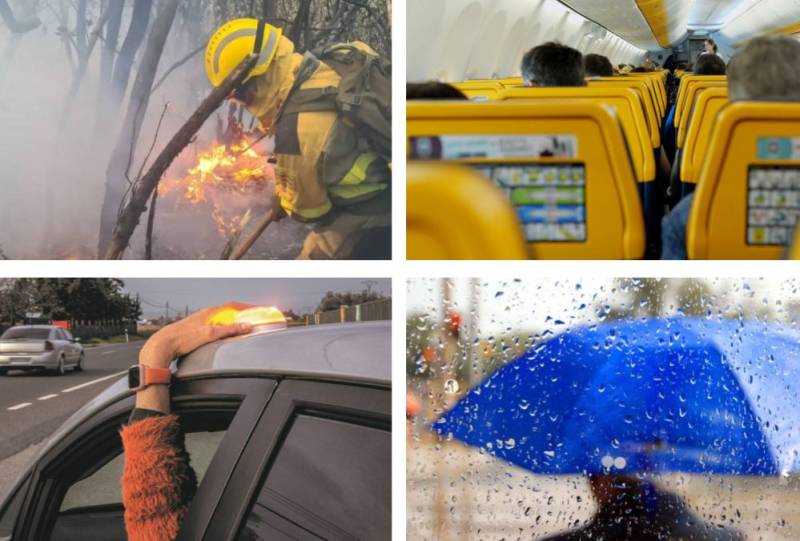
As has become something of a tradition for our final Editor’s Roundup Weekly Bulletin of the year, we are closing out 2025 with a look back at all the major news stories this year had to offer us, from the ‘apagón’ blackout back in April and the riots in Torre Pacheco to the worst summer for forest fires, heatwaves and mosquitoes in decades.
This is 2025, the year in review:
January
The year started with a raft of dodgy stories, starting with a shocking incident that took place over the Christmas and New Year period when a local Torrevieja man was lured under false pretences, assaulted and forced over several hours to withdraw more than €9,000 from ATMs and gambling venues across the Vega Baja.
The ordeal escalated further when he was driven to his home on the La Torre Golf Resort in Murcia’s Torre Pacheco, where he was robbed of valuables and his vehicle, and threatened with further violence. The case unravelled after the victim managed to alert security, leading to the Guardia Civil swooping in to save the day and arrest new fewer than eight suspects on charges of violent robbery, illegal detention and criminal organisation.
 The month was also marked by a grim homicide investigation following the discovery of the decomposed body of John George, a 37-year-old man from Northern Ireland, in rural Rojales (Alicante). John George had gone missing in mid-December and his death prompted a cross-border investigation involving Spanish and UK authorities. Multiple international arrest warrants have been issued for the suspected killer, whose definitive whereabouts still remain unknown to this day, a full year later. A sad story that refuses to go away.
Alongside these criminal cases, Spain’s health system came under intense strain as flu cases surged sharply after last Christmas, just as they have done before this Christmas. It’s something of a yearly occurrence, now, this worrying spike in flu cases, and all the misinformation about vaccines certainly isn’t helping.
February
In February, we got a glimpse of one of the most remarkable astronomical events in living memory, as Spanish skies were illuminated by a rare planetary alignment. Stargazers across the country enjoyed exceptional viewing conditions as up to seven planets appeared lined up. Venus, Mars, Jupiter and Saturn were clearly visible to the naked eye, in alignment with Earth, while Uranus and Neptune required optical aid. This really was a once-in-a-lifetime event as our solar system won’t see anything like this until the year 2492!
There was also theoretically good news when the government clamped down on nuisance spam calls. New regulations approved by the Ministry of Digital Transformation effectively banned unsolicited commercial calls from mobile numbers. Companies were required to use recognised 800 or 900 numbers, or properly registered landlines, in a move aimed at reducing scams and restoring public trust in telephone communications, although I don’t know about you but I still get loads of those annoying cold calls anyway.
The government also raised the minimum wage in February, up to €1,184 a month, benefiting around 2.5 million people. However, the increase was accompanied at the same time by the introduction of income tax for some minimum wage earners for the first time, meaning that the real impact of the wage rise on low-income households was somewhat less than expected.
There was justice for two British tourists in Murcia who died in a car crash back in October 2024 when police dismantled a large human trafficking network and arrested those responsible for the fatal crash.
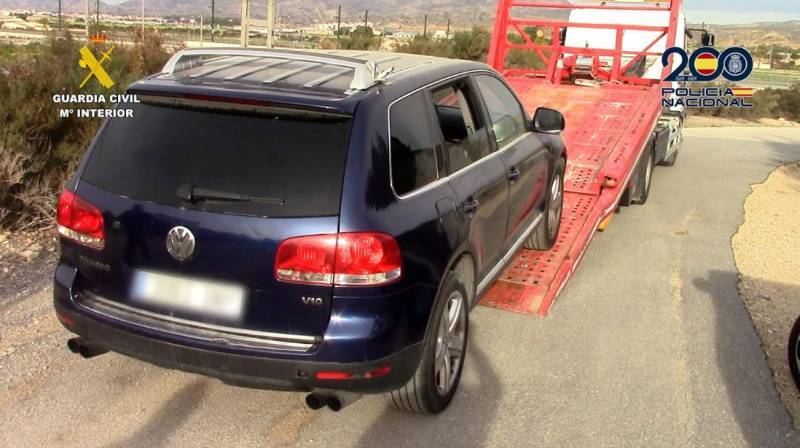
Seventeen suspects were arrested, and investigators uncovered evidence linking the group to illegal migration, drug trafficking and the horrendous La Manga motorway crash that resulted in a smuggler’s boat falling off the back of a trailer and decapitating the two poor tourists.
March
March saw the annual return of the summer flight schedules to Spanish airports, which runs through to October each year. The 2025 programme at Murcia Corvera Airport included 13 international routes and five domestic ones, doubling the number available during the winter season but offering fewer destinations than in summer 2024. Despite this, overall seat capacity increased by around 5%, with airlines such as Ryanair boosting flight frequencies rather than adding new routes. Some international connections, including Casablanca, Marrakesh and Ostrava, were dropped, while all the UK, Irish and Belgian routes returned, while a new Marseille service was started up by Volotea.
There was also another crime story in Murcia with the exposure of an unlicensed care home that had been operating for years in La Manchica, a small village in the municipality of Cartagena.
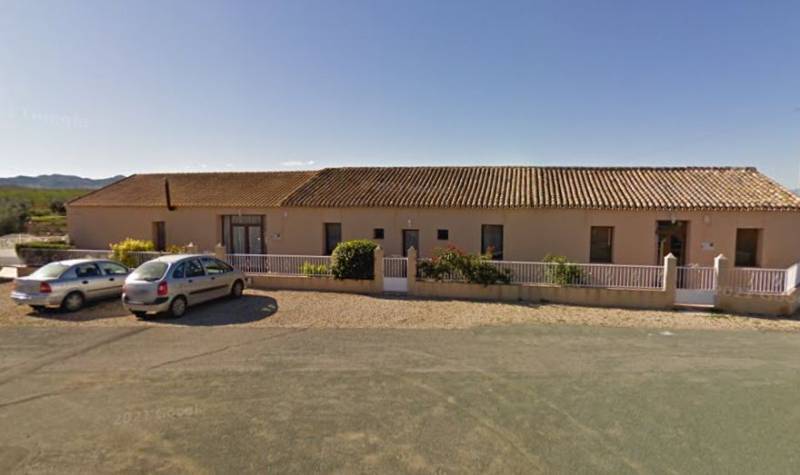
The case came to light after an 84-year-old English woman was hospitalised in critical condition, suffering from severe dehydration, kidney failure and infected wounds. The property, owned by a British couple, was officially registered as a rural guesthouse and bar but was reportedly used as an unauthorised residence for elderly people where the elderly were reportedly mistreated, malnourished and taken advantage of.
April
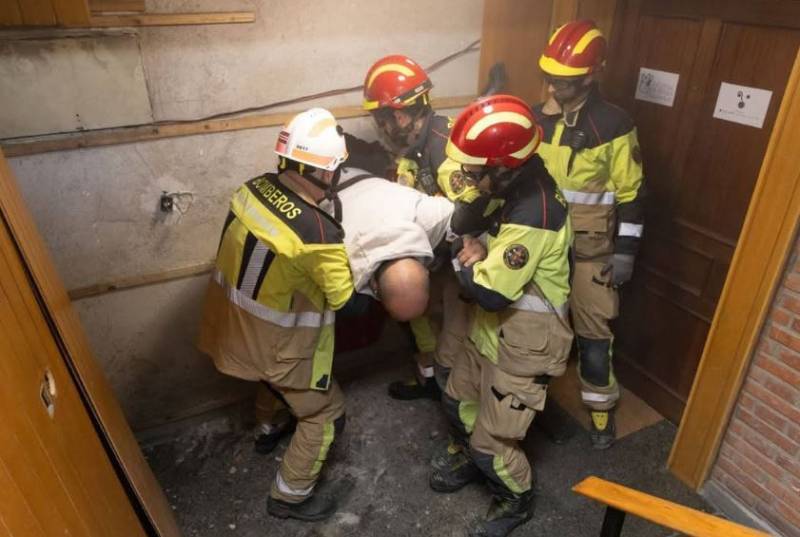
The major news story of April, and pretty much of the entire year, was the unprecedented nationwide power blackout that brought much of Spain to a standstill on Monday April 28. The sudden and massive outage swept across mainland Spain, Portugal and parts of southern France, paralysing transport, communications, businesses and essential services.
Traffic lights failed, mobile networks collapsed and thousands of people were left stranded on trains and in lifts. Hospitals switched to emergency generators and cancelled all non-urgent care, while emergency services dealt with hundreds of incidents involving trapped residents, particularly in large cities. It was, in a word, chaos. And frankly very scary, if you want two words.
The government declared a national emergency in eight autonomous communities, placing the Ministry of the Interior in charge and activating the highest level of civil protection to ensure people could stay safe and be rescued where needed. Straight away, people started saying that it was Putin who had caused the blackout on purpose, or lizard monsters, or woke culture gone mad, or some such nonsense. But really the blackout was caused by something more prosaic: a chain reaction of power surges in the grid, triggered by failures in solar plants, exacerbated by a lack of voltage control and coordination problems between operators.
By the next morning, more than 92% of electricity demand in Spain had been restored, though full normality took longer in some areas. Five deaths were linked directly to the blackout, as were thousands of euros worth of people rushing out to buy candles, hand-powered radios and tinned food, in case it should happen again.
Alongside the energy crisis, April brought major regulatory changes from the government affecting housing, travel and daily costs. There were new rules for tourist rental licences, giving communities of owners the power to decide whether holiday rentals should be allowed in their buildings and urbanisations or not. Communities up and down the country have been holding EGMs ever since, trying to reach an agreement on whether to allow Airbnbs and Bookings to operate in their residences. Everyone’s got an opinion on whether they bring in more wealth to the community or just cause a nuisance, and the answer basically depends on what kind of place you live in.
Travel rules also changed. From April 2, EU citizens travelling from Spain to the UK were required to apply for an Electronic Travel Authorisation (ETA) for short stays – basically a £16 surcharge to get into the UK for Spaniards. At the same time, the European Union confirmed another delay to the launch of its equivalent, the ETIAS, pushing the mandatory introduction back to 2027. At the same time, British residents in Spain were also warned that the Green Certificate would no longer be accepted under the EU’s upcoming Entry/Exit System, prompting renewed calls to switch to the TIE residency card.
On the housing front, there was an effort to stem the spiralling cost of property for ordinary people with the scrapping of the golden visa scheme, which allowed non-EU citizens to obtain Spanish residency through large financial investments. There was also progress in Spain towards a new law aimed at speeding up squatter evictions with a proposal to allow property owners to regain possession within 48 hours in clear cases of breaking and entering or home invasion. Crucially, courts also ruled that owners could cut off utilities to illegally occupied properties in certain circumstances, a significant shift in favour of homeowners and against the ever-present okupas.
April also saw the rollout of a new rubbish collection tax in Spain that meant municipalities with more than 5,000 residents were obliged to introduce or adjust charges to reflect the true cost of waste collection and treatment, with the average annual cost for most households being estimated at around €85, but that is higher for certain households depending on location and property value.
Finally, several pension reforms took effect in April. Retirees earning a state pension in Spain starting gaining greater flexibility to combine work and pensions, earlier access to partial retirement and increased pension payments. Together, these measures have been introduced this year to try to adapt Spain’s pension system to an ageing population while keeping older workers economically active. All in all a big month, April.
May
In May, it was the EU’s turn to change air travel rules with a new rule banning power banks from being taken in checked luggage. You know those portable batteries you can use to charge smartphones, tablets and laptops wherever you are? Under updated guidance from the European Union Aviation Safety Agency, they are now required to be carried in hand luggage only as they are apparently at risk of overheating or catching on fire in aircraft holds. So now you have to take them in your hand luggage with you, but don’t even dream of getting it out and using it during the flight!
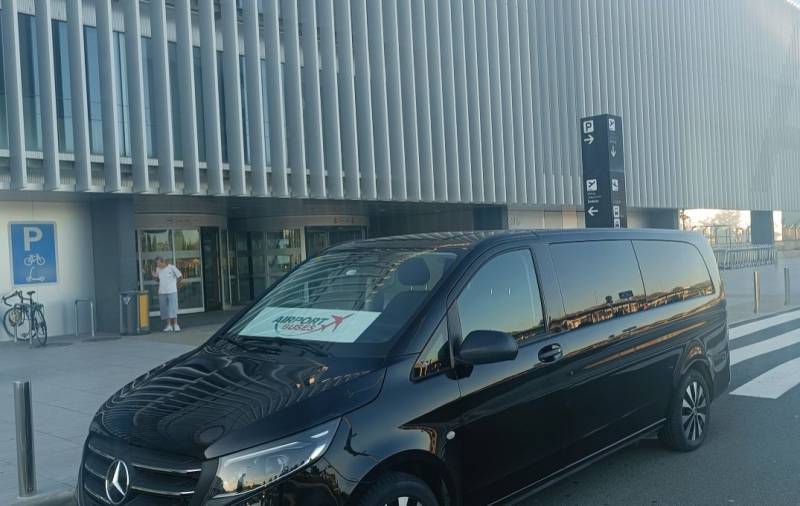 In the Region of Murcia, May also marked the launch of a new dedicated airport transfer service, Airport Buses, which began operating scheduled routes linking Corvera Airport with towns and coastal resorts around the region and as far away as Torrevieja and San Juan de los Terreros. The service, which coincides with every UK or Ireland flight coming in or out of the airport, has been very well received by local frequent flyers, being praised for its punctuality, convenience and high level of customer service. Just what the airport needed, but beware – it’s the kind of thing that if you don’t use it, you’ll lose it. They need your support and your custom to keep being able to offer this great service!
June
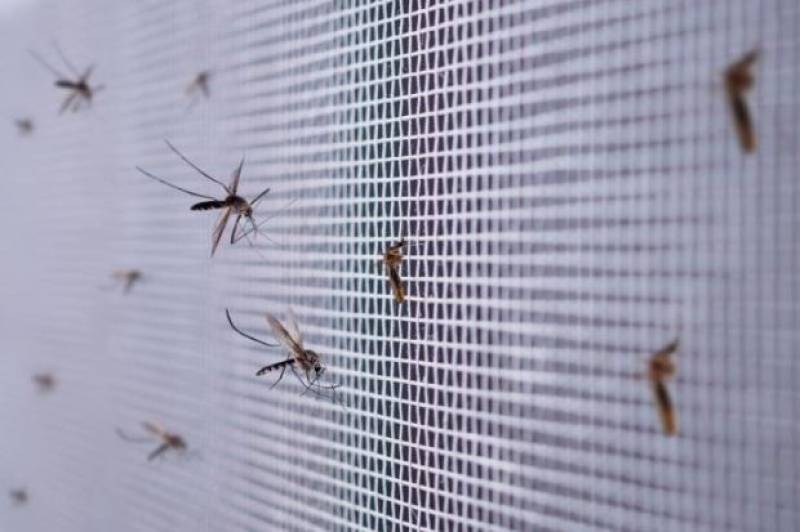 June well and truly brought the start of summer as the country was hit by an early and intense heatwave. Temperatures early in the month were more typical of mid-July, with parts of Andalucía near Seville approaching 40°C already! It was the beginning of a prolonged and exceptionally hot summer, and alongside the heat, Spain faced one of the worst mosquito seasons in years. Heavy rainfall in the spring followed by the sudden spell of hot weather created ideal breeding conditions for mozzies, and there was particular concern centred on the spread West Nile virus, which had already caused fatalities in previous summers, especially in Andalucía.
It’s the spread of invasive species which are really worrying with the dreaded tiger mosquito continuing to expand across much of southern Spain, while the Japanese mosquito terrorised the north. These species are capable of transmitting serious illnesses including dengue, Zika, chikungunya and yellow fever. And you can bet they’ll be back in force in summer 2026!
July
In July, there was widespread travel disruption due to a strike by French air traffic controllers which left airports across Spain affected as flights passing through French airspace were grounded. Ryanair and easyJet were particularly hard hit, with hundreds of flights cancelled during one of the busiest travel periods of the summer. Not a great start to the holiday season!
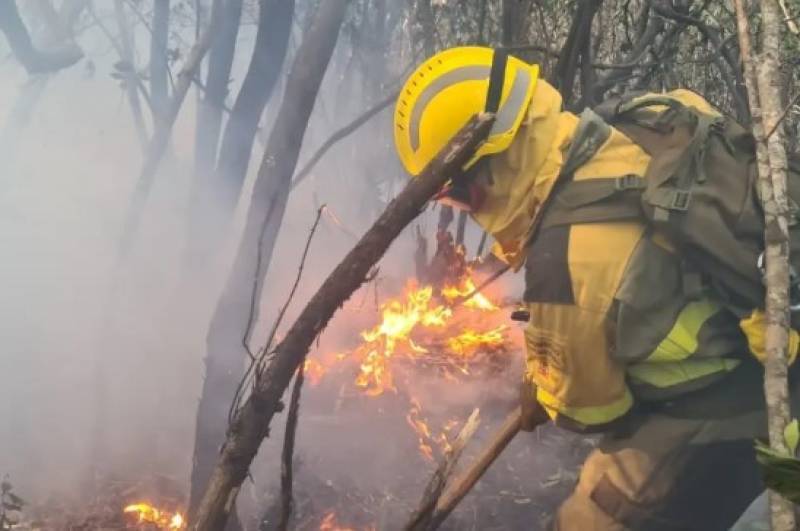
2025 was also the worst year for forest fires in Spain in 30 years, with July being particularly bad for wildfires in regions such as Andalucía, Madrid, Catalonia and Castilla y León. Hot, dry conditions and strong winds allowed fires to spread rapidly, forcing whole towns to be evacuated up north. Meanwhile, smoke from a major wildfire in Tarragona drifted hundreds of kilometres south, causing panic in Orihuela Costa and around the Mar Menor, where residents initially feared a local emergency, which was quite dramatic. Sadly, it is becoming all too familiar to hear the words “worst year for forest fires” each year, and we run the risk of becoming immune to the gravity of a situation which is deadly and getting worse. This is the real, tangible face of climate change.
Mid-July brought another shock when a 5.4-magnitude earthquake struck off the coast of Almería. The quake was felt across much of southern Spain and as far away as Portugal, rattling buildings and alarming residents. While no serious injuries were reported, minor damage occurred, including a partial roof collapse at Almería airport, and a series of aftershocks followed. Of course, small earthquakes around magnitude 2 occur all the time in this part of the country, but this Almería one was bigger than most.
Not only that, but halfway through the month the entire country’s news agenda was dominated by unrest and rioting in the Murcia town of Torre Pacheco, where the assault on a 68-year-old man triggered days of tension and protests. Although the suspects were arrested, fake videos and social media rumours inflamed fear and drew extremist groups to the town from across the rest of the country. Police numbers were increased as residents, particularly from the North African community, reported feeling unsafe going out, but thankfully since then the town has managed to quell its anti-immigrant outburst and people can feel safe and secure as part of a community again.
Also in July, Spain began rolling out a whole bunch of new road signs, updated and modernised to reflect new forms of mobility, improve clarity and make roads safer for drivers, pedestrians and cyclists alike. Have you got your head around them yet?
August
Ryanair staff continued the travel disruption when ground staff employed by Azul Handling began a nationwide strike. The action affected key services such as check-in, boarding and baggage handling at airports where Ryanair had permanent bases, including Alicante, Málaga, Palma, Madrid and Barcelona. The strike began on August 15 – the start of the August festivo weekend in Spain – and continued on selected days for many more weeks, having a knock-on affected even on airports without Ryanair bases. Staff were striking over disputes when it comes to their job stability, working hours and the alleged mandatory imposition of overtime.
New property figures released in August showed that house prices continued soar this year in Spain, with an average annual increase of 6.7%. Murcia stood out with an extraordinary 37% year-on-year rise, and several other regions posted double-digit growth too. House prices are now significantly higher than in 2024, driven by continued limited supply and strong demand, particularly in coastal and expat-heavy areas. Mortgage amounts also continued to climb, even as overall sales dipped slightly. Together, the data paint a picture of a market that remains active, true, but increasingly expensive and out of reach for many buyers. Another ongoing topic of concern for Spain that will doubtless loom large in 2026.
September
Early September brought violent storms to parts of southern and eastern Spain, particularly the Vega Baja area of Alicante province. Torrential rain and winds of up to 100kmh caused flooding, fallen trees and road closures in towns such as Orihuela, Cox, Callosa de Segura and Redován. With orange weather alerts in force, dozens of municipalities suspended the start of the school year, while emergency services urged residents to avoid travel and take extreme care. It was just the first of several large storms to come over the course of the autumn.
Elsewhere, Spain’s Ministry of Housing ordered more than 53,800 illegal holiday lets to be removed from platforms such as Airbnb and Booking.com. They were targeting properties that weren’t registered on the rental property digital registry or those failing to meet new standards, with the aim of returning homes to the long-term rental market. Another attempt to get a handle on the housing supply in favour of buyers, renters and people who actually have to live in Spain, as opposed to short-term rentals and holidaymakers.
Also in September, the government approved a draft law to extend smoking bans to outdoor terraces, including vapes and e-cigarettes, while in a widely welcomed change Spain lifted its long-standing ban on blood donations from people who had lived in the UK between 1980 and 1996. Previously, people in this group could not give blood in Spain due to mad cow disease, but a very sensible and long-overdue overturning of that ban has served to expand the pool of blood donors, particularly in regions with large populations of British people. So now you’ve got no excuse. Give blood today and save a life!
October
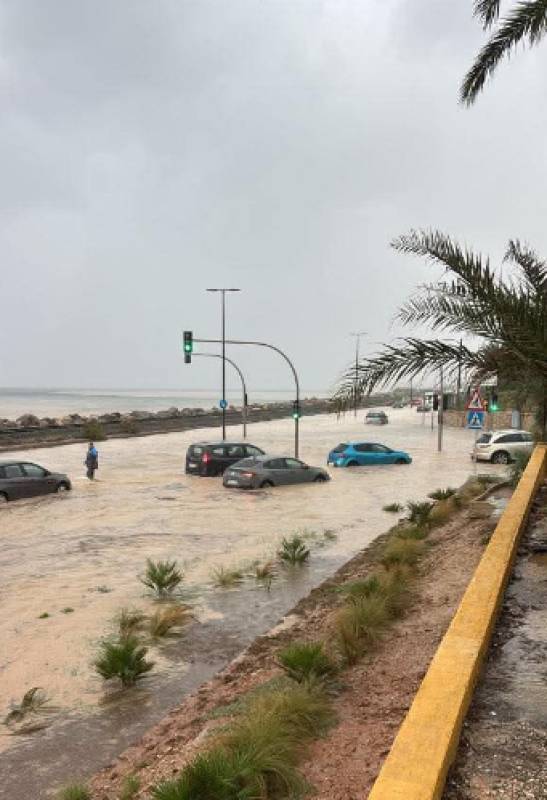 In October, the DANA Storm Alice caused widespread disruption across southern and eastern Spain, with Murcia and Alicante among the worst-hit areas. Torrential rain, violent storms and strong winds triggered flash flooding, submerged roads and vehicles, and forced the suspension of schools, universities and social centres across dozens of municipalities. Emergency services responded to hundreds of incidents, flights had to be cancelled or diverted, and major public events were called off as authorities urged residents to stay indoors and avoid travel. Thankfully, there were no serious injuries reported, but it’s just one more example of the growing number and intensity of extreme weather episodes in Spain.
Also in October, the EU’s new Entry/Exit System began to be implemented. The rollout is lasting until April 2026, and is beginning to replace the old passport stamping at airports and ports with biometric registration, including fingerprinting and facial images, to digitally track short stays within the Schengen area. For British travellers at some larger airports, this system that is designed to speed up border crossings has actually meant longer queues and some people whose passports shouldn’t be stamped are still having them stamped. The truth is there is confusion amongst border control guards and travellers alike about the new rules – what queues to stand in, who needs a stamp and who doesn’t. Don’t expect this mess to be sorted out before next April.
November
One lighter news story that went viral in November came from Alicante Airport, where JD Wetherspoon confirmed it would open its first pub outside the UK. It’s planned to open in January 2026, and is sure to divide opinions between those who fancy a bit of home comforts when out on holiday in Spain and those who say that Spain has plenty of its own quality bars and beers without having to import bargain British brands.

The month also brought international sporting attention to Murcia as La Manga Club hosted the Champions (UK) plc European Senior Masters for the third year running, and it was bigger and better than ever. The tournament, held from November 6 to 9, featured a record €350,000 prize fund and attracted major names from golf and sport, alongside extensive international media coverage. One to watch for future years as this competition is bound to get even bigger and will put Murcia on the global sporting map.
More serious news emerged from Cartagena when a major fire broke out at Santa Lucía Hospital on November 26. Flames spread rapidly along the exterior façade of one block of the hospital, fuelled by strong winds, forcing the evacuation of four floors. Luckily, firefighters were able to bring the blaze under control within just 20 minutes and, incredibly, no one was harmed, although the building suffered significant material damage.
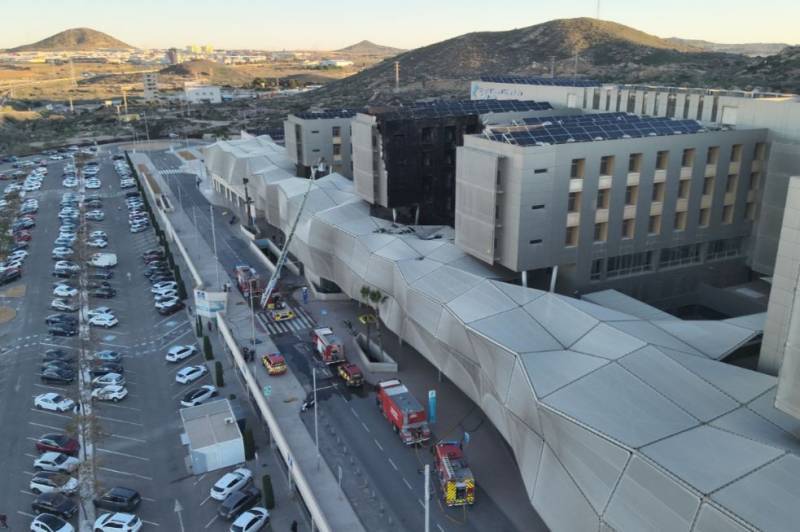
The final report isn’t in yet, but it’s suspected that the fire may have been caused by a wayward cigarette, even though it’s not allowed to smoke on hospital grounds. Questions yet to be answered, here.
December
December saw the return of the flu, earlier and stronger than ever, and bringing us right back to where we started the year. Flu infection rates rose sharply to more than 75 cases per 100,000 inhabitants, almost double the level recorded when the epidemic threshold was first crossed, and hospitals were put under so much pressure that several parts of Spain even made it mandatory for people to wear facemasks in health centres again. These vestiges of the Covid-19 pandemic are still not entirely gone, and continue to be seen in parts of Spain, especially worn by elderly or vulnerable people.
And finally, looking ahead to what the New Year will bring us, Spain will introduce a major change that will affect drivers in 2026. From January 1, motorists will be required to carry the approved V-16 emergency beacon, which will fully replace the old-style warning triangles. It will be obligatory for all cars to have one of these lights inside in case of breakdown or accident.
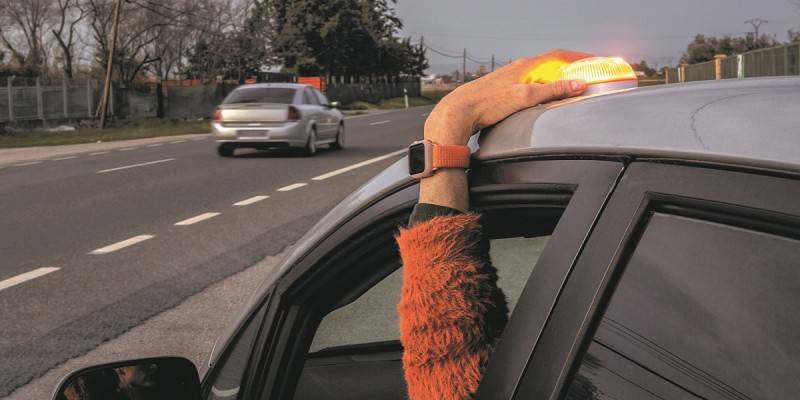
They can be plonked on the roof and activated without leaving the vehicle, to assure driver safety, and they are connected to the DGT who are automatically informed of any incident. Sales of these devices are expected to generate more than €1 billion in business, alongside substantial VAT revenue for the state. Have you got yours yet?
Electric scooter riders will also face major regulatory changes from January 2026. Civil liability insurance and registration with the DGT will become mandatory for scooters, closing what authorities have described as a long-standing legal loophole and what pedestrians have long described as a pain in the neck. Riders who fail to comply will risk fines of up to €1,000 and may be banned from riding until their paperwork is in order. Let’s hope the rules can actually be enforced by Local Police, the same way they regularly stop scooter riders to remind them they should be wearing high-vis jackets and helmets, and not go faster than 15kmh, and be over 16 years of age…
And who knows what other exciting, emotive and extraordinary news stories might await us in the year to come?! You can be sure we’ll be there to report on it…
You may have missed…
…a small selection of other news stories from around Spain this week:
- Spain’s Christmas Lottery brings several big prizes to Murcia.
The 2025 Christmas Lottery, Spain’s famous Lotería de Navidad, brought some big wins to Murcia, with the third prize landing in San Pedro del Pinatar and Cartagena - Earthquake to blame for Murcia road closure near Atalayas shopping centre.
An emergency repair operation is under way on Avenida Miguel Induráin in Murcia capital after serious damage was detected in one of the city’s main sewer lines, and technicians are saying that an earthquake on Monday December 8 was to blame. - Princess Leonor’s first solo flight in Murcia.
Spain’s Princess Leonor has taken her first solo flight at the Air and Space Academy in San Javier, an important step in her military training. - Two Polish men arrested in Elche, Alicante following fatal house attack.
Two men were arrested in Elche after allegedly beating three other men in a violent attack that left two people dead and another seriously injured. - Weekend at Bernardo’s: British family accused of wheeling dead grandmother onto Málaga flight!
A Málaga to London Gatwick flight last weekend made headlines after a British family was accused of boarding with their 89-year-old grandmother, reportedly telling crew she was “tired”.
And that’s all for this year. Thanks for reading this week’s roundup and thanks for sticking with us through the whole of 2025! We really appreciate your support. We won’t be back next week, I’m afraid, as we’re taking a couple of weeks off from sending the bulletin, but stay tuned for the next one in mid-January.
Until then, a Happy New Year to you and yours, filled with life, light, peace and happiness!
¡Hasta pronto!